

YARN TUTORIAL: 100% Wool vs. Superwash Wool - What Knitters Need to Know
Recently, I received an email from a knitter who was trying to figure out why her handknit scarf looked substantially different after blocking. She explained that she had knit the scarf using a worsted #4 weight merino wool yarn and the Thoughts of You scarf knitting pattern. The yarn label said to “hand wash in cold water and lay flat to dry”. She placed her scarf in a mesh bag and washed it in cold water on the “hand wash” cycle of her washing machine.
When she removed the wet scarf and laid it out on her blocking mats, she immediately noticed something was wrong. The fabric looked “matted”, and she said she could barely see the stitch work. The stitch definition, in her words, had “virtually disappeared”.
Even before she sent photos of the project, I had a pretty good idea of what had happened, especially when she used the word “matted” and mentioned the loss of stitch definition.
UNINTENDED FELTING OF 100% WOOL:
Unfortunately, I had to be the bearer of bad news. The yarn she used was 100% wool, not superwash wool. Even though she used cold water and a gentle cycle, the agitation of the washing machine was enough to start the felting process.
The hard fact is that once wool begins to felt there’s no turning back. Felting causes the wool fibers to bind together, creating a dense, mat-like fabric that obscures stitches. There’s no way to reverse that process.
Nearly all untreated 100% wool will felt when exposed to agitation and/or warm water. When felting occurs, the fabric shrinks… sometimes dramatically… and stitch definition is reduced or completely lost.
SUPERWASH WOOL DOES NOT SHRINK OR FELT:
Superwash wool, on the other hand, has been treated to eliminate the risk of felting and shrinking.
Vogue Knitting Knitopedia: The Ultimate A to Z for Knitters (the original edition on Amazon | the updated edition on Bookshop.org) is a helpful reference book that explains the superwash process this way: “Wool can be superwashed either by being coated with a polymer resin that smooths out its natural scales, or by undergoing an enzyme bath to tame the scales’ interlocking propensity.”
SHOPPING FOR WOOL YARN - TAKE NOTE OF THE LABEL:
Yarn that is machine-washable without felting is typically labeled with the trademarked “superwash” designation. Or, the label might say “machine washable wool” which also indicates that it will not shrink or felt.
When shopping for yarn for a knitting or crochet project, it’s important to take note of whether the yarn is superwash or not. Some knitters prefer the convenience and softer feel of superwash yarns. Others are passionate about using untreated, 100% wool for its natural, woolly character.

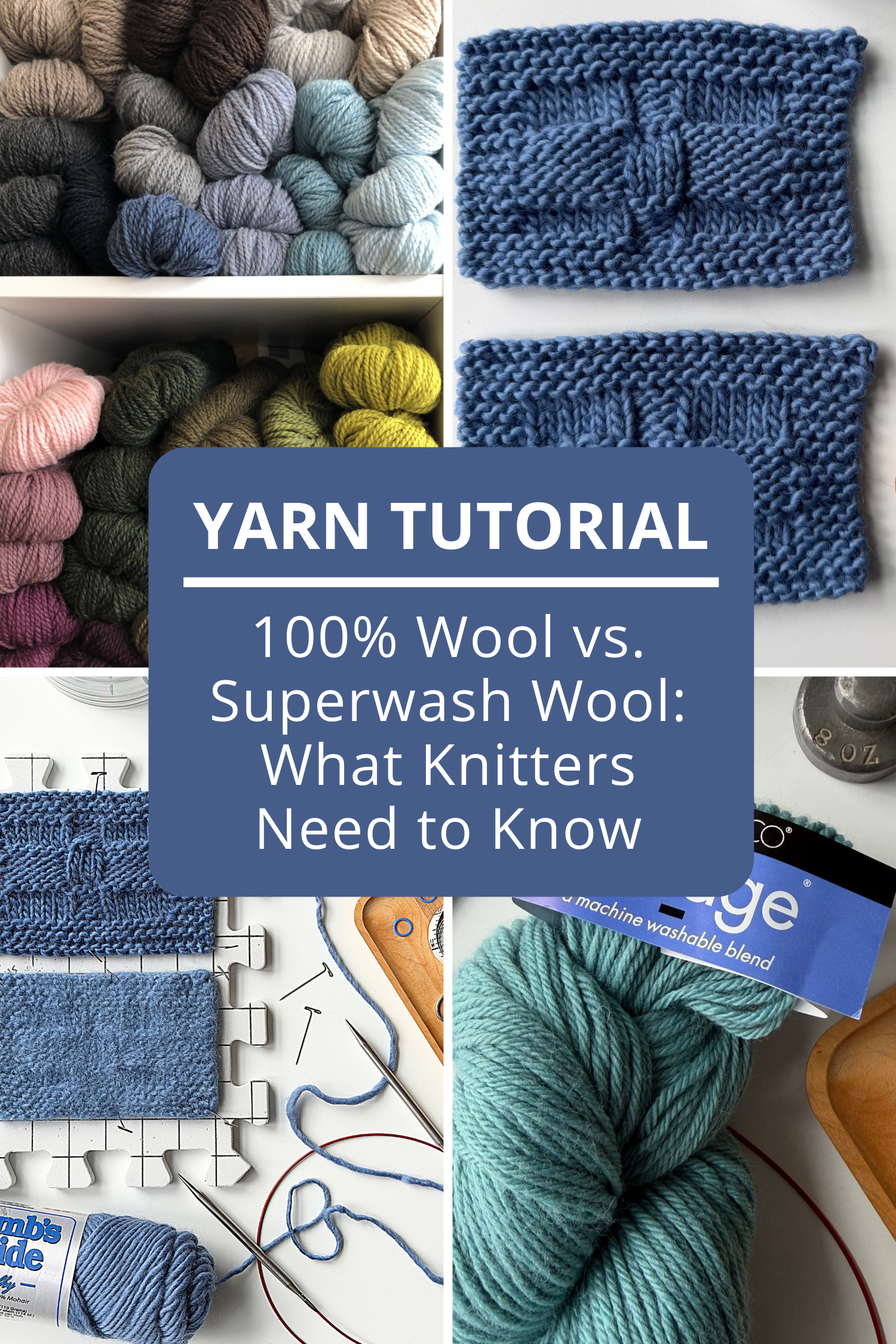
Yarns with “superwash” on the label have been treated to prevent shrinkage or felting. Malabrigo Rios worsted #4 weight yarn is labeled “100% Superwash Merino Wool”. This “Blue Jean” colorway is one of my favorites!
BE CAUTIOUS ABOUT USING THE WASHING MACHINE:
Vogue Knitting Knitopedia: The Ultimate A to Z for Knitters (original edition on Amazon | updated edition on Bookshop.org) sums it up well:
“Nearly all people who have done laundry have had the unfortunate experience of felting something by accident because they washed a wool sweater. Not merely shrunk, a felted sweater is now composed of a new material, and fiber that is felted can never be unfelted.”
I’m among those who have accidentally felted a sweater! I had a classic cream-colored cable-knit sweater in college, and I still remember how thick… and much smaller… it became after an unfortunate washing episode.
My advice… don’t trust the washing machine with your handknit wool items. Even gentle agitation or slightly warm water can start the felting process.
Additionally, for many reasons I recommend being selective about placing handknit items in the washing machine. I’ve heard from knitters who experienced their precious handknit project getting snagged and damaged in the washing machine.
TIPS FOR BLOCKING WOOL HANDKNITS:
When blocking a handknit item made with 100% wool, gently soak it in cold water in a large bowl or clean plastic container. Carefully transfer it to an old towel and press out excess water. Never wring or twist the knitting. Then arrange the piece on blocking mats, shaping gently without stretching.
In contrast, superwash wool can become very stretchy when it’s wet! When blocking superwash wool adjust the knitted item on the blocking mats to match the desired gauge. Use the finished dimensions listed in the pattern as a guide. This might require a lot of "nudging" the stitches closer together if the knitting has stretched out.
Click here to see my step-by-step tutorial for blocking handknit blankets and scarves. Many of these tips can be applied to blocking other handknit items.
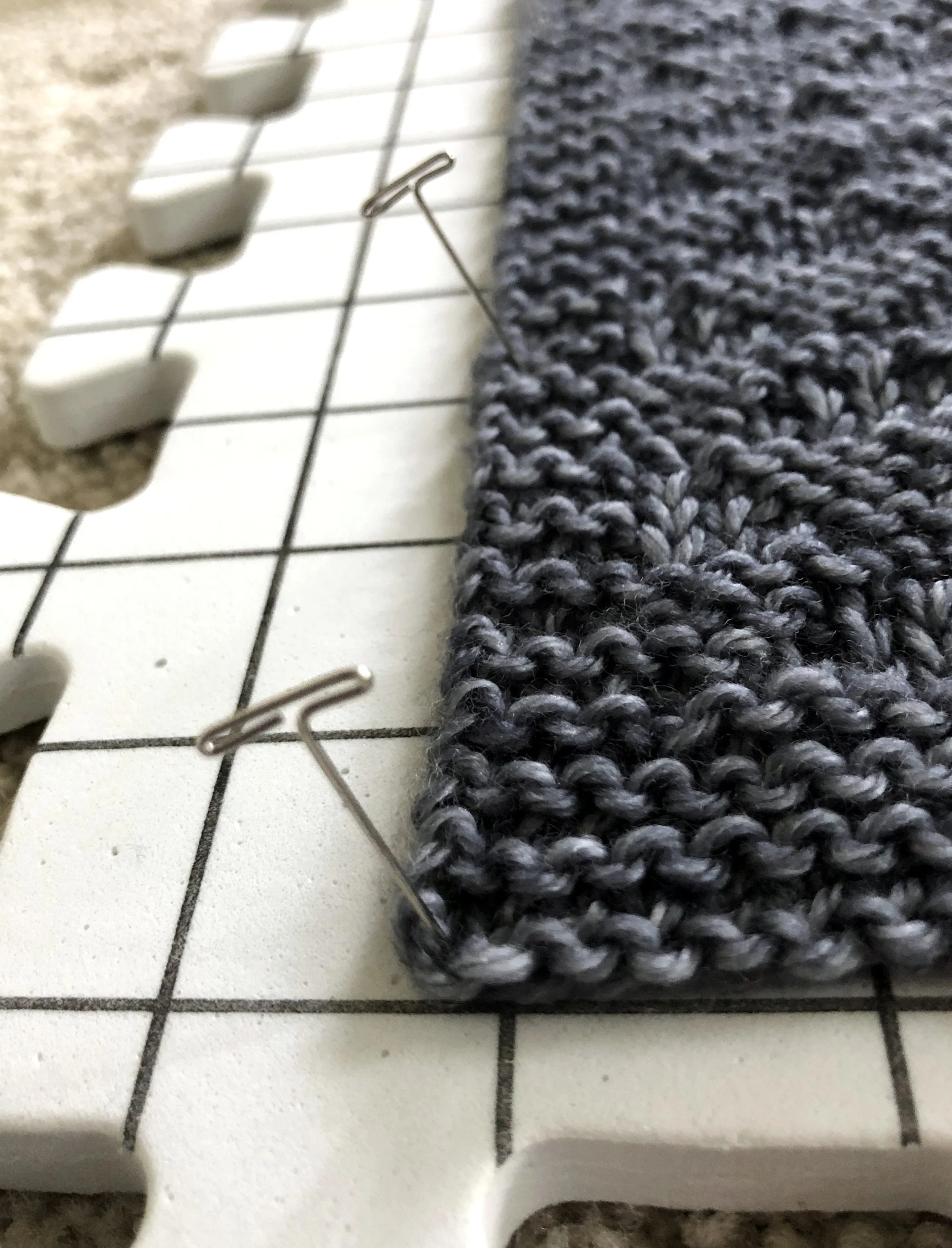
Blocking your finished knitting project makes a big difference in the appearance of your project! Click here to get details about blocking handknit blankets and scarves. Many of these tips can be applied to blocking other handknit items.
DOUBLE CHECK THE YARN DESCRIPTION & LABEL:
A few days later, the knitter wrote back to say she had decided to reknit the scarf, since it was meant to be a special gift for a friend. While reordering the yarn, she realized that the yarn company offers two versions of their worsted #4 weight wool yarn: one that is 100% wool (non-superwash) and another that is superwash wool. It’s an easy detail to overlook… especially when shopping online!
For example, Malabrigo Yarns offers two worsted weight options… one is superwash and the other is not:
Malabrigo “Rios” worsted #4 weight yarn is 100% superwash merino wool
Malabrigo “Worsted” #4 weight yarn is 100% merino wool from Uruguay. The care instructions are “hand wash and dry flat” because it will shrink and felt.
Before you soak or wash your completed knitting project, take a moment to double-check the yarn label. It’s a small step that helps ensure your handknit item gets the care it deserves.

Berroco Vintage worsted #4 weight yarn is a blend of acrylic, superwash wool and nylon. The helpful yarn label clearly communicates that the yarn is “machine washable”. However, for many reasons I recommend being selective about placing handknit items in the washing machine. I’ve heard of precious projects getting snagged and damaged by the machine.
ILLUSTRATING HOW WOOL CAN SHRINK AND FELT:
To illustrate the felting process, I knit two identical samples using yarn from my stash. I used Lamb’s Pride Bulky #5 weight yarn in the “Winter Blue” colorway and US 10.5 knitting needles.
Brown Sheep Company’s Lamb’s Pride yarns are long-time favorites of mine. I’ve used both the worsted and bulky versions of this heirloom quality yarn for many knitting projects. The yarn is a blend of 85% wool and 15% mohair. Even with the mohair content, this yarn will shrink and felt when washed due to its natural, untreated wool content.
To show how felting dramatically changes the appearance of the stitches, I used the stitch pattern featured in the Thoughts of You Scarf and All the Memories Blanket knitting patterns.
The matching swatches measured approximately 6.75" wide by 4.5" high.

I knit two identical swatches using Brown Sheep Company’s Lamb’s Pride Bulky #5 weight yarn in the “Winter Blue” colorway, US 10.5 knitting needles, and the stitch pattern featured in the Thoughts of You Scarf and All the Memories Blanket knitting patterns.
After knitting the two swatches, I used two different methods to “wash” and block them.
One swatch (at the top in the photo below) was briefly soaked in a bowl of cold water, then placed on a towel to gently absorb excess moisture.
The other swatch (shown at the bottom) was washed in the washing machine in hot water… twice.
Then, I placed both wet swatches on a blocking mat and pinned the edges so each was a neat rectangle shape.
Notice how the swatch that was washed in hot water in the washing machine is noticeably smaller. The wool fibers reacted to the hot water and agitation, causing the yarn to felt.

Here the two swatches are on a blocking mat to dry. The swatch on the top was “hand washed in cold water” in a bowl at the kitchen sink. The swatch on the bottom was exposed to heavy agitation and hot water in the washing machine. This caused the swatch to shrink and “felt”.
Once dry, the differences between the two swatches are easy to see. The top piece… hand washed in cold water… clearly shows the stitch pattern.
In contrast, the bottom piece… washed in the machine… has barely visible stitches and a thick, matted texture.

After the two swatches of knitting dried… the contrast is very visible. The top piece that was hand washed shows off the stitch pattern clearly. The bottom piece that was put in the washing machine shrunk noticeably from an original size of 6.75” wide x about 4.5” high… to 6” wide x 3.75” high. The stitches are barely visible and the knitting has a thick, matted quality. (Note that shrinkage rates could vary based on the yarn used, as well as other factors.)
HIGHLIGHT THE BEAUTY OF FELTED KNITTING:
Years ago, I enjoyed making several items designed specifically to highlight the beauty of felted wool. These patterns typically call for knitting the item larger than the desired finished size. The completed item is then washed in hot water in the washing machine to intentionally shrink and felt the handknit wool project.
At this time, I don’t have any felted knitting patterns in my Fifty Four Ten Studio pattern collection. However, this little experiment could certainly inspire something in the future!
In the meantime, Ravelry has many wonderful knitting patterns for felted projects including slippers, purses, warm mittens, bowls and baskets, trivets, and more. A small bowl or basket is a fun first felted project!
Click here to see my collection of knitting patterns! All of my knitting patterns are also available on Ravelry.
Happy knitting!


